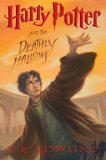
 Fans will not be disappointed. Harry Potter and the Deathly Hallows marks the end of a long journey for Harry and author J.K. Rowling. Like it's predecessors, it is a greatly entertaining read, but it is also a highly satisfying conclusion to a seven-book saga.
The story gets off to an action-packed start. Harry is at the Dursley's for the last time, trying to convince them to accept protection from wizards. Uncle Vernon and Aunt Petunia struggle with the idea that the wizarding world is a danger to them because they sheltered Harry, however reluctantly. Harry's cousin Dudley is the only one who understands what such protection means, having once been attacked by one of the worst things in the wizarding world, a soul-sucking dementor.
No sooner do the Dursleys depart to go into hiding then the fighting -- and the dying -- begin. Harry and his escorts from the Order of the Phoenix are ambushed as the leave the Dursleys, breaking the charms that protected Harry at his aunt and uncle's until he was 17. Harry makes a narrow escape and returns to the Burrow, home of the Weasley family.
The Burrow is buzzing as the Weasleys prepare for the wedding of son Bill to Fluer de la Cour. All does not go well at the nuptuals, however, as Death Eaters, evil Lord Voldemort's servants, crash the party looking for Harry. Harry and his best friends Ron and Hermione barely escape by apparating away (disappearing from one spot and ending up in another), something they can now do, having come of age.
The trio go on the run, camping in remote areas, rarely staying in any spot for more than one night. There are many arguments among Harry, Ron, and Hermione about how to go about the task they believe headmaster Albus Dummbledore set for them before he died -- find and destroy the remaining horcurxes, objects that house portions of Dark Lord's soul, which keep him alive even if his body is destroyed.
Every previous Harry Potter book takes place over the course of a school year, and this one is no exception. The action includes trips to Godrich's Hollow, where Harry was born and the site of his parents' murder, and Gringots, the Wizarding bank. As fitting with the series, at the end of this book they go to Hogwart's castle, where the final battle takes place. The story ends as it must, with a duel between Harry and Lord Voldemort. Anyone with any optimism at all will guess how it turned out and be right.
Among the many attributes of this final book is its proof that J.K. Rowling planned the whole series from the start. In Deathly Hallows she has indeed tied together elements of all the stories, while adding some twists fans could never have guessed. The most moving and surprising story was that of Hogwart's teacher Severus Snape, who seems to hate Harry but in whom Dumbledore had the utmost trust. Left for the very last chapters, it is both touching and astounding. Harry, on the other hand, comes to the point talked about throughout the series -- facing Voldemort -- but he has some mighty high hurdles to surmount before he gets there. And, once again, it is not entirely clear until the moment has passed, exactly what his fate will be.
The effect is an enormously moving work that keeps the reader guessing. Death abounds; I counted 13 characters who had appeared in other books of the series that were killed. There were many more, both explicit and simply alluded, that contributed to the "blood bath" J.K. Rowling said was coming.
J.K. Rowling has written a tale for the ages in her Harry Potter series, and Harry Potter and the Deathly Hallows is a fitting and satisfying ending. It is enjoyable and satisfying even though many details about the Harry Potter universe remain unanswered. Ms. Rowling has intimated that she will write an encyclopedia of Harry's world, which the fans, and probably only the fans, flock to. No matter. The series that started many reluctant readers on their way will continue to do so, none-the-less for its now being complete. Of Ms. Rowling's achievement, perhaps nothing better can be said then, "Hurrah!"
Posted to the CurledUp.com book review site.

