Thursday, November 30, 2006

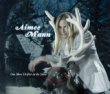
Music Review: One More Drifter in the Snow by Aimee Mann

Independent alterantive rocker Aimee Mann has created an eclectic and satisfying Christmas album in One More Drifter in the Snow. Best known for her work with the 80's band 'Til Tuesday and her Oscar-nominated score for the movie Magnolia, Mann's work is psychologically aware and often melancholic. Many of the songs on Drifter are no exception, but her music never loses the beat, and she turns in some interesting takes on several classics.

The mood starts out jazzy with the rueful "Whatever Happened to Christmas" and the classic "The Christmas Song." "Christmastime", the third entry, is a medium-tempo rock tune enlivened by the accompaniment of the mandola. She gives the country-guitar-tinged "Ill Be Home for Christmas" a little twist by changing the lyrics to "I'll be home for Christmas / where the love light light blinks / I'll be home for Christmas / if only in my drinks."

The fifth song is a pretty straight-up version of "You're a Mean One, Mr. Grinch," from the animated TV show How the Grinch Stole Christmas. I hadn't realized how much speaking occurred in this song, but guest Grant Lee Phillips gives a spirited performance worthy of the original. It is a really fun entry.

I love what Mann does with the sixth selection, "Have Yourself a Merry Little Christmas." A strong drum beat drives the song in a way that gives the piece an intense, resonant undertone. The bass theme continues in "God Rest Ye Merry Gentlemen," whose spare initial accompaniment gives it a 19th century air.

Rounding out the album are the classic "White Christmas" and the original "Calling on Mary." "White Christmas" is dominated by bass and strummed electric guitar, which gives the song a deeper sound than Bing Crosby's version. "Calling on Mary," the one song in the collection that Mann wrote, is an alone-at-Christmas tune very much in keeping with her rock sound and themes.

If you're like light or cheery holiday music, then you probably won't care for Aimee Mann's entry into the Christmas album market. If you like music sung by a woman with a gorgeous voice that is sometimes pensive, sometimes playful, and always interesting, then you should give Aimee Mann's One More Drifter in the Snow a listen. It's quickly becoming a favorite of mine.

Cross-posted to Blogcritics.

Wednesday, November 15, 2006

CD Review: This American Life: Stories of Hope and Fear

Ever have a friend who told really good stories about his or her life? Stories that were self-deprecating; tales of frustration, missed opportunities, or things that didn't turn out as expected; yarns that were at once funny, offbeat, happy, and sad? What if the stories were set to the perfect background music to enhance them and broadcast on the radio? Then you'd have This American Life, produced by Public Radio International and heard on thousands of public radio stations nationwide. If you took a bunch of those stories, grouped them loosely around the themes of hopes and fears, and put them out on CD, you'd have This American Life: Stories of Hope & Fear.

If you've ever heard This American Life, you will know exactly what you're getting with this two-CD set. For the uninitiated, let me explain a little. This American Life was created by Ira Glass at Chicago Public Radio. The show is an hour long, and as Mr. Glass says at the beginning, "Each week on our show we choose a theme and offer you a series of stories on that theme." He then announces the subject of the show, how many acts it will play out in, who will tell each story, and a brief description of each act. The tales tend to be truthful rather than fictional and are always set to instrumental music that complements the story. Sometimes Ira Glass interviews someone or talks to someone as they tell a story; sometimes another interviewer assumes narrator duties; oftentimes, it is a lone voice essentially reading an essay set to music.

TAL has been around for more than a decade, but the format and tone have not grown old. The take on life presented here is like the ironic flip side of Norman Rockwell. These Americans run the gamut of behavior and emotions, but mostly the narratives have the feel of getting inside someone's head: what they were thinking, what they perceived, and how this falls short or is just totally different than the expected. The voice of the show is smart, funny, articulate, reflective, and idiosyncratic. The interviewers and story tellers do not sound unprofessional, but they don't sound like trained actors, either. It's all very conversational.

The tales on this CD set exemplify the TAL approach. The "hope" stories are not all that hopeful; rather, they are about what happens to hopes when we expose them to real life. Neither are the "fear" stories scary. They are about the fears we have and how we face them. Or more to the point, how we think about them.

The stories have both hilarious and touching moments. In them a new New York City resident has his hopes dashed about the quality of his apartment; coworkers try out the comedy sketches on the karaoke machine; a mother makes a videotape of herself so her mentally handicapped daughter will remember her when she's gone; a man who had a sex-change talks about his varied experiences of gender; a woman reads from her diary from when she was 13; a brother and sister remember how they made up a family to babysit for to get away from their mother's restrictions; a mentally handicapped man lists his fears; a woman has a ten-month tussle with MCI; a man ends up with his mother because his father can't accept that his son is gay; David Sedaris tells a tale of a chipmunk in love with a squirrel; and a man faces his fear of the monster ride on the boardwalk.

Stories of Hope and Fear might disorient someone who doesn't know the show, because it lacks the preliminary introduction about what it is one is listening to. Nor does Ira Glass give any kind of overview to the collection, he just launches in to the tales of hope, for which he gives a little spiel (no such tying together appears at all on the "fear" half of the CDs). It appears that no extra effort was put into creating this collection (one of TAL's "Greatest Hits" series).

Be that as it may, it is still a fantastic group of stories. There is nothing else around like This American Life, and this collection is a wonderful sample.

Cross-posted to Blogcritics.

Saturday, November 11, 2006

Review: One Good Turn is one good book

One Good Turn by Kate Atkinson is an amazing book with a deceptively simple title. The plot has so many layers that a more apt title might have been Matryoshka, for those Russian dolls that nest inside one another and make an appearance in the story. One Good Turn is also like a rich chocolate dessert made with the best ingredients -- delicious, filling, satisfying and leaving you planning the next time you can have some.

Jackson Brodie is not your ordinary English crime novel series protagonist. Divorced, middle-aged, a little grumpy but still in good shape, he has achieved his dream of retiring to France. An ex-cop-cum-ex-private detective, he's got a house in the foothills of the Pyrenees, and he has Julia, his actress girlfriend from Cambridge whom he loves, so life should be good. That it's not does not escape Jackson notice, but the notion is just dawning on him. As the book opens he has accompanied Julia to the Edinburgh Festival, where she will be appearing in an avant-garde play, and he promptly witnesses an incident of road rage. One man is about to beat another to death after a minor traffic accident when a bystander intervenes, which is the good turn of the title and kicks off all the action.

Told alternately through the point of view of the major protagonists -- a writer of formula crime novels, a has-been comedian, a female detective, the wife of a crooked real estate developer, and Jackson -- the narrative bobs and weaves and connects many dots over the course of the three days covered by the tale. "There are no coincidences, only explanations waiting to happen," Jackson says, and in One Good Turn, he is right. Atkinson reveals elements slowly. Associations showing themselves piece by piece, as if a covering page was were being slowly drawn back from a picture, the subject of which is not clear until the whole image is laid bare. As a mystery, this book is excellent.

What makes it really stand out, however, is the superb writing and shrewd observations of human nature. In lucid and potent prose, the reader is treated to all kinds of memories and thought excursions that are so prevalent in the heads of real people. Each character is 100% believable, Jackson Brodie first among them. While much of his background was revealed in Case Histories, the first of Atkinson's novels focusing on Brodie, the exposition surrounding him here both deepens his character and stands fine by itself for anyone who did not read the first book.

The novel is quite funny at times, and I'm sure I would have found it even more amusing if I were English; I could tell there were references I just didn't get. Not content to spin a mystery and throw in some great lines, Atkinson is also philosophical. Her characters contemplate religion but are not religious, struggle with their identities, and are taken with the idea of a fresh start in life. In the case of Mr. Brodie, starting over has lost its luster, and as the book closes, the reader is left with the impression that it's his old life he hears calling.

We don't get to know, however, what Jackson will do at the end of the week. His three-day adventure is over, but he is less certain about his life than there was at the beginning of the novel. This is another strength of Ms. Atkinson's -- the mystery is solved, but the characters lives are not resolved, and you get the feeling she's just gotten rolling.

Kate Atkinson is known as a literary mystery writing for good reason; One Good Turn is not a book one can just breeze through. The threads of the narrative intertwine, but not in a tight weave, and one must pay attention to catch the six-degrees-of-separation connections. It is well worth the effort, however. So sit down, get comfortable, and be prepared to be entertained for a good long time.

Cross-posted to Blogcritics.